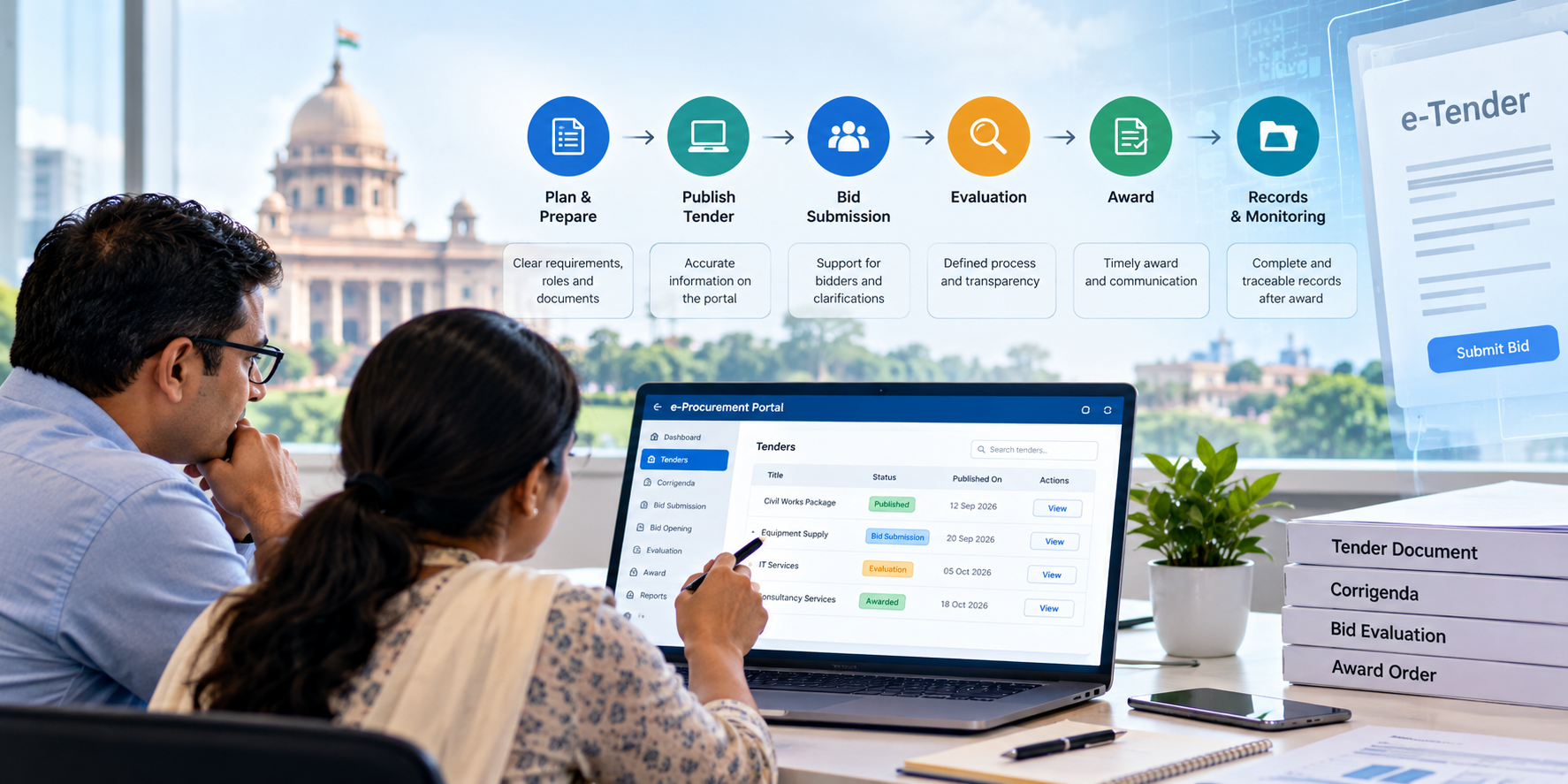
Publishing a tender online is only one part of the procurement journey. Reliable digital procurement also depends on preparation, clearly defined responsibilities, controlled portal actions and well-organised records.
The process starts before the tender is published
Digital procurement does not begin when somebody clicks Publish.
Eligibility conditions, schedules, forms, evaluation criteria, responsibilities and supporting documents need to be clear first. A procurement portal can make publication and participation easier, but it cannot resolve ambiguity in the underlying tender.
Portal actions are part of a controlled workflow
Publishing, corrigenda, bid opening, EMD-related actions, evaluation and award involve different responsibilities and checks.
When these activities are treated as isolated portal tasks, avoidable errors and rework become more likely. A defined workflow helps teams understand who is responsible for each action and what needs to be retained as evidence.
The bidder journey matters too
Officials and participating vendors experience the same procurement from very different sides.
Clear instructions, predictable document formats, timely clarifications and appropriate technical support reduce unnecessary friction for bidders without interfering with the authority responsible for procurement decisions.
Keep the transaction record connected
Tender documents, corrigenda, clarifications, opening records, evaluation material and award information should remain organised around the same procurement transaction.
This becomes especially useful when teams change, an old procurement needs to be reviewed, or information has to be retrieved later.
Digital procurement requires more than portal familiarity
Knowing how to use an e-Tendering portal is important, but it is only one part of reliable implementation.
Many problems arise from documentation, workflow, user readiness, DSC configuration or unclear responsibilities rather than from the portal itself.
The practical value comes from understanding where the issue sits and helping the appropriate user or team resolve it.